
“Second Order Reality” (NERO Editions, 2025) è il progetto dell’artista italiana Carola Bonfili, che esplora stati percettivi legati al “pensiero magico” infantile e all’esperienza di viaggio nei mondi virtuali. Attraverso un video in CGI, un ambiente immersivo in realtà virtuale e una serie di sculture, l’opera racconta il viaggio iniziatico di M’ling, una scimmia antropomorfa di dieci anni che vede parti del suo corpo trasformarsi in pietra e intraprende una ricerca di guarigione. Il progetto combina riferimenti che spaziano dalla letteratura ottocentesca all’architettura brutalista, passando per i fumetti contemporanei e l’intelligenza artificiale generativa. Di seguito pubblichiamo un estratto del volume, un testo di Daniela Cotimbo.
THE FEELING OF WHAT HAPPENS, BUT DOESN’T
According to theories of mind, self-consciousness is a process grounded in different levels of perception of reality, activated when we need to understand and interact with the random structures of the physical and social worlds. In other words, we relate to ourselves the moment we experience the world around us. Portuguese neuroscientist Antonio Damasio has identified at least three levels of perception that contribute to this experience of presence: the proto-self, an intuitive perception of successfully differentiating the self from the external world through action; the core self, which refers to an intuitive perception of successfully acting in the external world toward a present object; and the extended self, which represents a true awareness of the success of that action.
We can thus imagine the core self as a second order of reality, where the relationship with the surrounding world begins to carve new pathways within cognitive structures—a liminal space of the mind where things exist but have not yet been linguistically encoded.
Sometimes, the perceptual information we gather is insufficient for a correct interpretation of the current situation. In such cases, this gap is often filled by mental images, illusions, déjà vu, or, in more extreme cases such as those experienced by psychiatric patients, actual hallucinations.
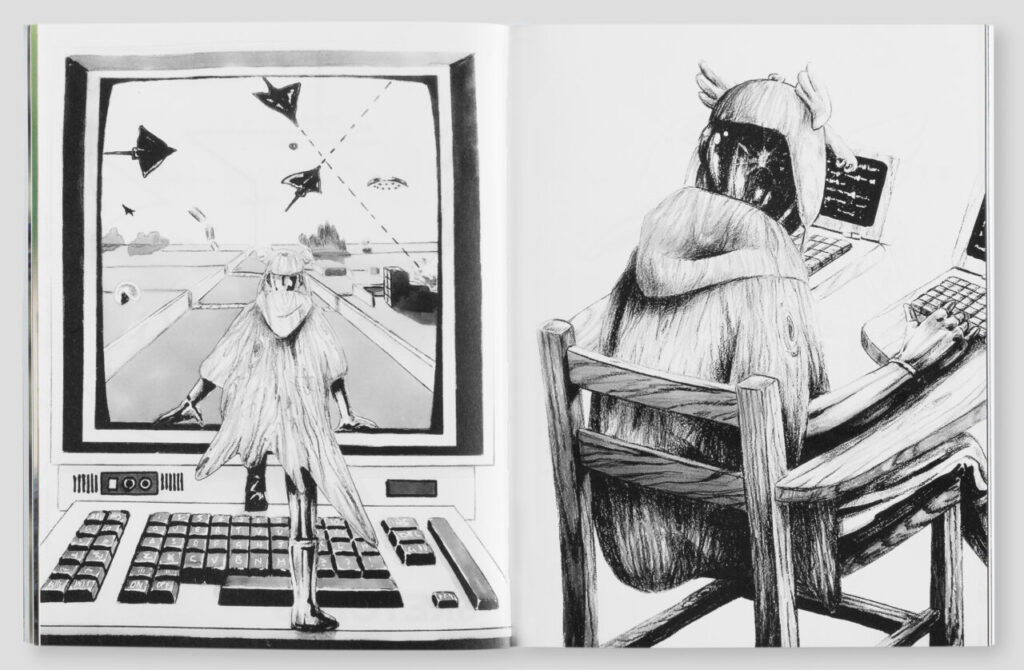
As Oliver Sacks states, the ability to see with the mind is inherent in humans and can be defined in terms of imagination. However, under certain conditions, such as the use of psychotropic substances, these perceptions are amplified, escaping conscious control and creating an ambiguous relationship with what we define as real.
In Second Order Reality, Carola Bonfili explores the parallelism between these perceptual states and the crossing of virtual worlds, where these sensations frequently arise due to the slippage between intentionality and actual action. If, on the one hand, our aptitude for worldbuilding drives us to design synthetic worlds that operate within predetermined rules, on the other hand, it is precisely the push into the unknown—those moments when we go beyond our knowledge of the medium—that brings us to an experience of presence.
This ability to move in and out of predetermined narrative structures is not unique to advanced technological media; it is something that Vladimir Propp already identified within the morphological structure of fairy tales, which operates according to predetermined and recurring patterns. Examples include the consistent roles of characters and the narrative cycles that repeat in similar ways. According to Carl G. Jung, such a structure manifests as a process of individuation, where the fairy tale archetype is rooted in the symbolic production of generative myths. More precisely, Jung views mythology and storytelling as the product of mental activity, with myth serving as a channel through which this activity can express and manifest itself, ultimately leading the individual to complete identification.
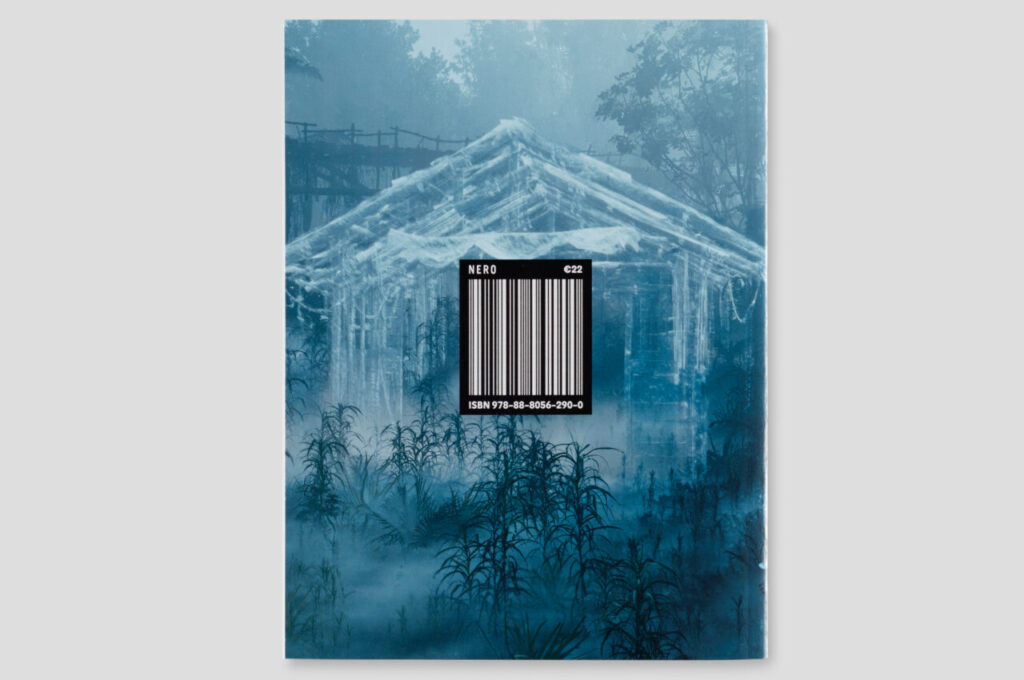
In the case of the fairy tale, this pattern usually involves the main character facing a complication from the onset. For the monkey M’ling, this complication is the petrification of certain parts of her body. This obstacle is only resolved through intuition and the aid of magical objects, ultimately leading to the achievement of balance.
In The Stone Monkey, the video trailer that introduces the story of Second Order Reality, the achievement of such balance comes through complete surrender to magical intuition. Accompanied by an unusual companion—a creature composed of a floating tank supported by a pear (Tanky Pear)—M’ling traverses landscapes populated by unlikely creatures, mysterious objects, and melodies whose origin she does not recognize.
Along this imaginative journey, a sense of melancholy runs through us. The bewilderment seen in the little monkey’s eyes, the perturbing rhythm of sound, the estrangement coupled with wonder when confronted with the infinitely large, such as the towering robot or the large Acoustic Mirrors that stand isolated in the landscape: each vision is shrouded in a dreamy lightness that invites us to lose ourselves fearlessly within this jungle of sensations.
Sound, the language of the irrational par excellence, will lead M’ling toward a solution to her initial problem, for which, however, an explanation will always remain elusive.
Bonfili engages in a continuous negotiation with the extraordinary, placing first her protagonist, and subsequently the viewer—as seen in Level 1, Illusions That We Should Have, but Don’t (VR installation)—in a state of perpetually crossing the boundaries of the known. This dreamlike, organic flow pervading the entire narrative manifests itself in assonance with children’s magical thinking, an exceptional cognitive device that enables them to live in an otherwise incomprehensible world by constantly renaming reality according to the categories stimulated by their imagination.
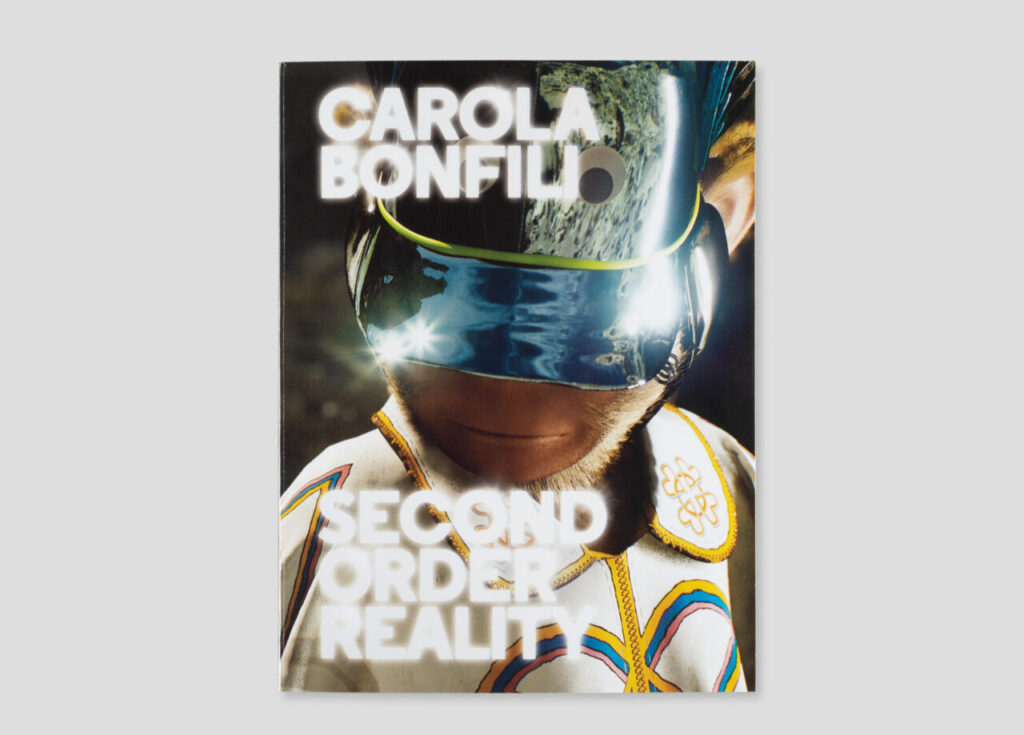
Tratto da “Second Order Reality”, di Carolina Bonfili, Nero Editions, 104 pp, 22 euro

